🌙 Sleep explainer · Why the early hours are the hardest to sleep through
🌙 Sleep · Explainer

The real reason so many women over 40 wake at 3am

And why "sleeping pills" don't fix it. It's one of the most common sleep complaints in the UK, and the usual advice, no screens, no caffeine, chamomile tea, rarely touches the actual cause.

4 min read · Updated July 2026
Why 3am, specifically The hormone link after 40 Why sedatives miss it
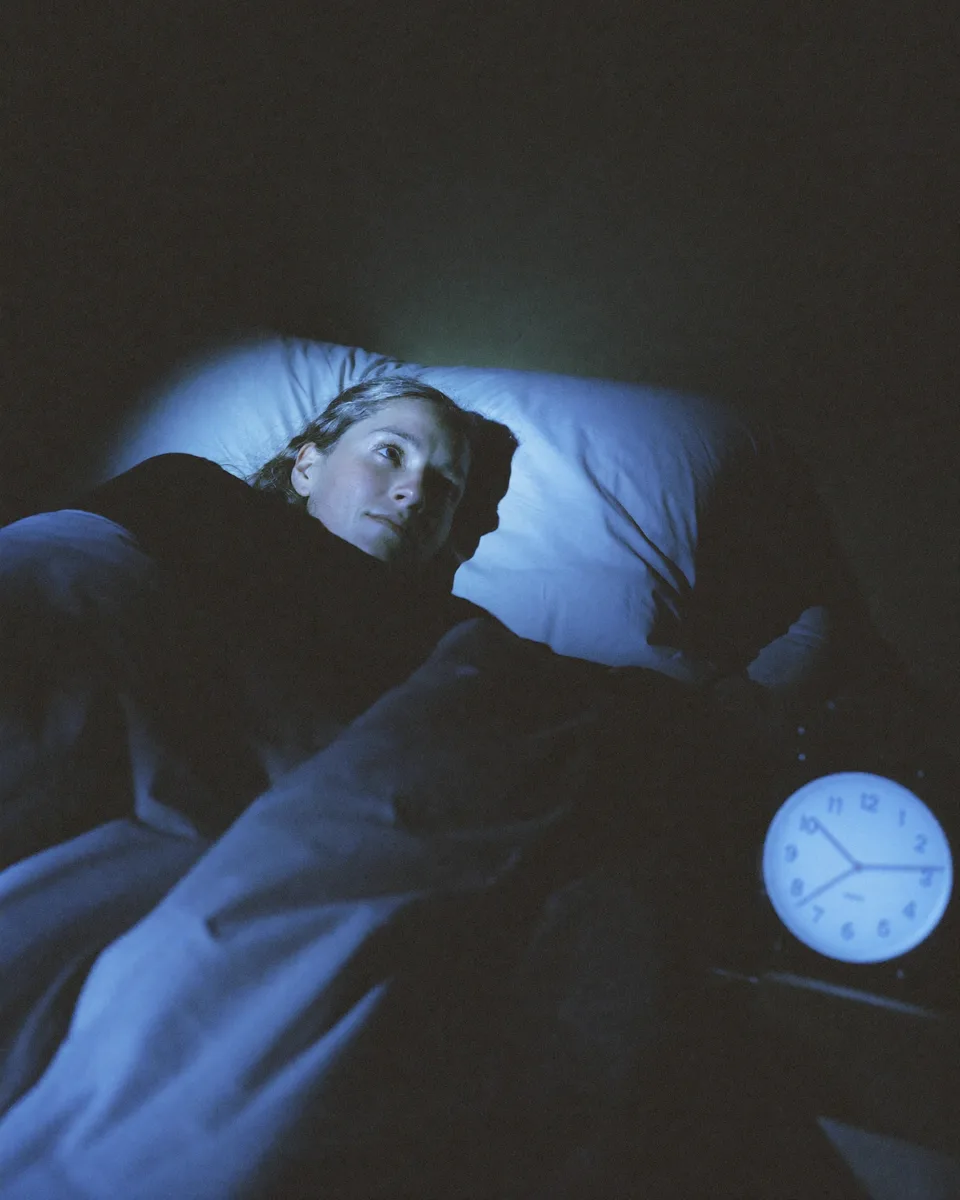
A woman lying awake in bed in the early hours, looking towards a bedside clock
03:04

Wide awake. Again.

90 minute
sleep cycles
90 min
the length of one sleep cycle
~3am
when your deep sleep quota runs out
Cortisol
rises before dawn by design
GABA
the brake that loses support after 40
The 3am club

You fell asleep fine. That's the frustrating part.

No trouble drifting off at 10.30. Then, almost to the minute, your eyes open at 3am.

Wide awake. Mind already running through tomorrow's meetings, that email you didn't send, a conversation from three days ago.

You lie there doing the maths. If I fall back asleep now, I'll get three more hours. The maths never helps.

By the time the alarm goes off, you've had six broken hours and a masterclass in ceiling-staring. And then you're expected to be sharp, patient and on form for a full working day.

If this sounds familiar, you're in large company. Sleep maintenance problems (waking during the night and struggling to get back off) are consistently reported as one of the most common sleep complaints among UK adults, and they become markedly more common for women from their early 40s onwards.

Waking at 3am isn't a character flaw, and it isn't "just stress." It usually has a specific, physiological explanation.

And once you understand it, the standard advice starts to make a lot less sense.

The real cause

Why your body clock keeps pulling you awake

Three things line up in the early hours. Individually they're harmless. Together they open your eyes.

Depth of sleep across a typical night A hypnogram showing deep sleep concentrated in the first half of the night. After about 3am the cycles stay in lighter sleep and REM, where a wake-up is far more likely. deep sleep zone Awake REM Light Deep 3am wake 11pm 1am 3am 5am 7am Depth of sleep through the night

Illustrative schematic of a typical night, not measured data.

01
The timing isn't random

Why 3am, specifically?

Your sleep isn't one long block. It runs in cycles of roughly 90 minutes, moving between deep sleep and lighter REM sleep.

In the first half of the night, deep sleep dominates. By around 3am, you've largely used up your deep sleep quota, and your cycles become lighter and easier to interrupt.

At the same time, your body begins its natural pre-dawn shift: cortisol, your alertness hormone, starts rising in the early hours to prepare you for waking. That's normal. It's supposed to happen quietly, beneath the surface of sleep.

The pre-dawn cortisol rise, on a settled versus an already-primed nervous system Two curves of cortisol through the night. On a settled system the rise is gentle and stays below the level that wakes you until morning. On a system already carrying stress, the rise starts higher and climbs earlier, crossing that level at around 3am. high low Cortisol enough to wake you Primed system Settled system 11pm 1am 3am 5am 7am The same rise, two different starting points
Primed system Settled system

Illustrative schematic, not measured data.

02
A signal landing on a primed system

The wake signal that fires too hard

The problem starts when that cortisol rise is bigger or earlier than it should be.

If your baseline stress load is high (demanding job, caring responsibilities, a brain that doesn’t clock off), your nervous system carries that tension into the night. When the natural early-hours cortisol shift arrives, it lands on an already-primed system.

The result: instead of a gentle background rise, you get a spike strong enough to pull you fully awake. Right in the middle of your lightest sleep window. Around 3am.

The wake signal rising as the calming brake weakens Two crossing lines. Cortisol, the wake signal, climbs through the early hours. Support for GABA, the brain's calming brake, falls away across the night. They cross at around 3am, the point at which the wake signal outweighs the brake. high low Relative strength wake signal wins Cortisol (wake) GABA brake (calm) 11pm 1am 3am 5am 7am A weaker brake meets a stronger signal
Cortisol (wake signal) GABA brake (calm signal)

Illustrative schematic, not measured data.

03
The layer nobody explains

Why women over 40 feel it most

There's a second layer, and it's rarely explained properly.

From the early 40s, progesterone and oestrogen begin to decline. Progesterone matters here because it interacts with GABA, the brain's primary calming neurotransmitter, the chemical "brake" that keeps your nervous system settled through the night.

Less progesterone means less support for that GABA braking system. Combine a weaker brake with a stronger 3am cortisol signal, and night waking stops being occasional and starts being routine.

So the real issue isn't that you can't sleep. It's that your brain's calming system is being outgunned by its wake signal in the small hours.

Why the usual advice disappoints

Sedation isn't the same as sleep

Once you see the mechanism, it's obvious why the standard solutions disappoint.

The usual answer What it actually does Why it misses 3am
Sleep hygiene
Cool room, no screens, no late caffeine
Sensible. Helps you fall asleep. It addresses falling asleep. Your problem is staying asleep. Different mechanism entirely.
Over-the-counter sleep aids
In the UK, mostly antihistamines
Sedates you, essentially knocking the system offline. Can leave you groggy, does nothing about the 3am cortisol spike, and tolerance builds quickly.
Herbal teas & pillow sprays
Chamomile, lavender, the wind-down ritual
A pleasant ritual. Genuinely relaxing. Active doses are usually far too small to influence brain chemistry in any meaningful way.
Nervous system support
Supporting the brake, not forcing the off switch
Supports the calming pathways your brain already uses. Targets the system that's actually failing in the early hours, rather than overriding it.

← Swipe to compare →

Notice the pattern. Every conventional option tries to force the brain off. None of them supports the system that's actually failing: the brain's own ability to stay calm through the night.
A different category

Support the brake, don't blunt the brain

Over the past few years, sleep researchers have paid growing attention to a different approach, sometimes described as nervous system support rather than sedation. Instead of blunting the brain, the idea is to replenish the specific calming pathways so that when the early-hours cortisol shift arrives, your brain has the resources to stay under. Three compounds come up repeatedly.

Magnesium salt crystals
The baseline

Magnesium

Magnesium is involved in hundreds of processes, including normal nervous system function. The bisglycinate form is bound to glycine, itself a calming amino acid, and is one of the best-absorbed, gentlest forms available.

Research has linked adequate magnesium status with better sleep quality, particularly in older adults.

Green tea leaves, the natural source of L-theanine
The brainwave state

L-theanine

An amino acid found naturally in green tea. Studies show it promotes alpha brainwave activity, the relaxed-but-not-sedated state you feel in the moments before sleep.

Research also points to a calmer response to stress, without drowsiness.

Chamomile flowers, the natural source of apigenin
The GABA brake

Apigenin

A plant compound found in chamomile. It's the reason chamomile has a reputation for calm: apigenin interacts with the same GABA receptors your brain's own braking system uses.

The catch: a cup of chamomile tea contains only a trace of it. Meaningful amounts require a concentrated dose.

Individually, each supports one part of the calming system. Together, they cover the pathway from three angles: the brainwave state, the GABA brake, and the nervous system's baseline tension.

The formula

Putting the mechanism in one capsule

This three-compound approach is exactly what a small UK supplement company set out to build.

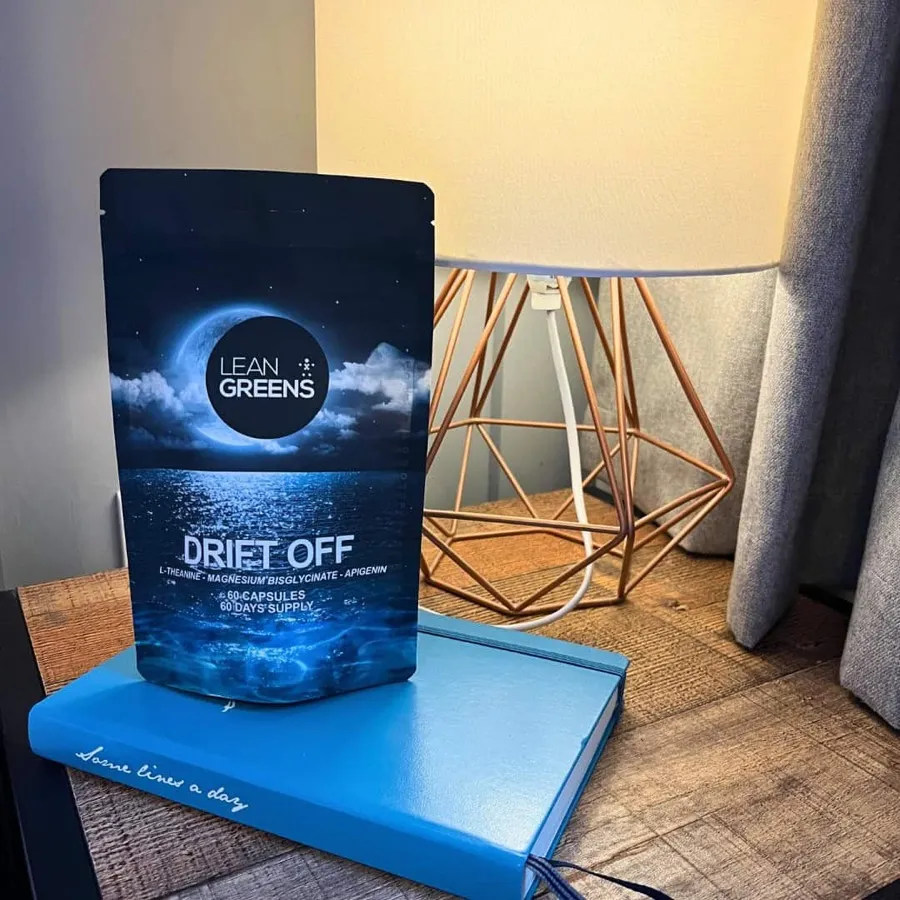
A pack of Drift Off on a bedside table beside a lamp and a book
UK, since 2012

The opposite of a sleeping pill

Lean Greens, a UK brand, has been making straightforward, no-gimmick supplements since 2012. They developed Drift Off: a single nightly capsule combining magnesium bisglycinate, L-theanine and apigenin at meaningful doses.

The design principle is the opposite of a sleeping pill. Rather than forcing your brain to switch off, Drift Off is designed to support the systems your brain already uses to switch itself off and, crucially, to stay off through the lighter sleep of the early hours.

A single Drift Off capsule held beside a glass of water
A few things worth knowing

One capsule, not a handful

Most people trying to replicate this stack end up buying three separate supplements and swallowing five or six capsules a night. Drift Off combines all three in a single capsule, taken 30–60 minutes before bed.

Non-drowsy by design. Because nothing in the formula is a sedative, it's designed to work with your body's own wind-down rather than override it: no "knocked out" feeling to sleep off in the morning.

A Lean Greens customer with a pack of Drift Off
Built for consistency

Made for the long game

Not habit-forming. These are nutrients and plant compounds your body already recognises, not drugs your brain adapts to and then depends on.

Each pack is a 60-night supply, because nervous system support builds over weeks, not overnight. Most users report the clearest difference after two to three weeks of consistent use.

Real customers

What users report

Verified reviews from the Drift Off product page.

5.0 from 10 reviews · Drift Off
Verified

Life saver

"I've found as I get older it's harder to sleep through the night, however drift off is a life saver, and the new and improve version does make a difference. I definitely have a deeper sleep and if I do wake I find I can drift off again quickly."

Paula · 🇬🇧 Ayr, Scotland
Verified

Amazing increase to deep sleep

"Such a great product! I've noticed that sleep tracking via my Fitbit has records between 15 and 50% increase in Deep Sleep since taking this religiously every night! It's the first thing I pack, with my ear plugs and eye mask when I'm travelling!"

Anna Hamilton · 🇬🇧 London, England
Verified

Feel like a new person

"I have recently been very tired after a full night's sleep and came across an article about magnesium so I thought I'd give Drift Off another go. After 3 nights of taking the tablets an hour before bed, I have woken this morning feeling fully energised. I don't normally write reviews but I am so happy with this product that I had to let everyone know!"

Eleanor Dickie · 🇬🇧 Lairg, Scotland
Good questions

Before you try it

Nothing in the formula is a sedative. Drift Off is built around magnesium bisglycinate, L-theanine and apigenin, nutrients and plant compounds that support your body's own calming pathways rather than switching the system off. It's designed to work with your wind-down, not override it.

No. These are nutrients and plant compounds your body already recognises, not drugs your brain adapts to and then depends on. There's no tolerance ladder to climb.

Nervous system support builds over weeks, not overnight. Most users report the clearest difference after two to three weeks of consistent nightly use, which is why each pack is a 60-night supply. Consistency matters more than anything else.

Per capsule: Green Tea Extract 40% at 375mg, of which L-theanine 150mg. Magnesium Bisglycinate Anhydrous 13% at 320mg, of which magnesium 41.6mg. Chamomile Flower Extract 98% at 51mg, of which apigenin 50mg. Other ingredients: HPMC capsule shell, rice flour.

Suitable for vegetarians and vegans. Dairy-free, lactose-free, no soy. Manufactured on equipment that also processes nuts, milk, shellfish, fish and soya.

One capsule with water, roughly 30–60 minutes before bed. That’s the whole routine: no loading phase, no cycling on and off.

If you are pregnant, nursing, taking any medication or have a medical condition, speak to your GP or pharmacist before starting any new supplement. Lean Greens can't offer health advice or comment on individual circumstances.

Every pack is covered by Lean Greens' 60-day money-back guarantee: love it or a full refund. Sleep is individual, and the only way to know whether nervous system support works for your 3am pattern is to try it for a few weeks in your own bed.

Where to go from here

If your 3am wake-ups have a mechanism, they have an answer

Waking at 3am isn't random, and it isn't something you simply have to absorb into your life. In most cases it's a calming system that needs support, not a brain that needs sedating.

Drift Off: 60 capsules, 60 days' supply
60-night supply

Drift Off is £42 for a 60-night supply, 70p a night, or £35 on subscription. Every pack is covered by Lean Greens' 60-day money-back guarantee: if you don't notice a difference after giving it a proper run, they'll refund you. No returns paperwork, no quibbling.

Learn more about Drift Off
60-day guarantee Free UK shipping over £70 UK made since 2012
A woman waking naturally in soft morning light, rested

Sleep is individual. So is the answer.

That guarantee exists for a simple reason. The only way to know whether nervous system support works for your 3am pattern is to try it for a few weeks in your own bed.

Learn more about Drift Off

£42 for 60 nights · £35 on subscription · 60-day money-back guarantee

This content is for informational purposes only and is not intended as medical advice. Food supplements should not be used as a substitute for a varied and balanced diet and healthy lifestyle. If you are pregnant, nursing, taking medication, or have a medical condition, consult your GP before use. Individual results may vary.

Diagrams on this page are illustrative schematics intended to explain a mechanism, not measured data. Magnesium contributes to normal nervous system function, normal psychological function and the reduction of tiredness and fatigue. References to research into L-theanine and apigenin describe published studies of those compounds and are not claims made for this product.

Drift Off £42 for 60 nights · 60-day guarantee
Learn more